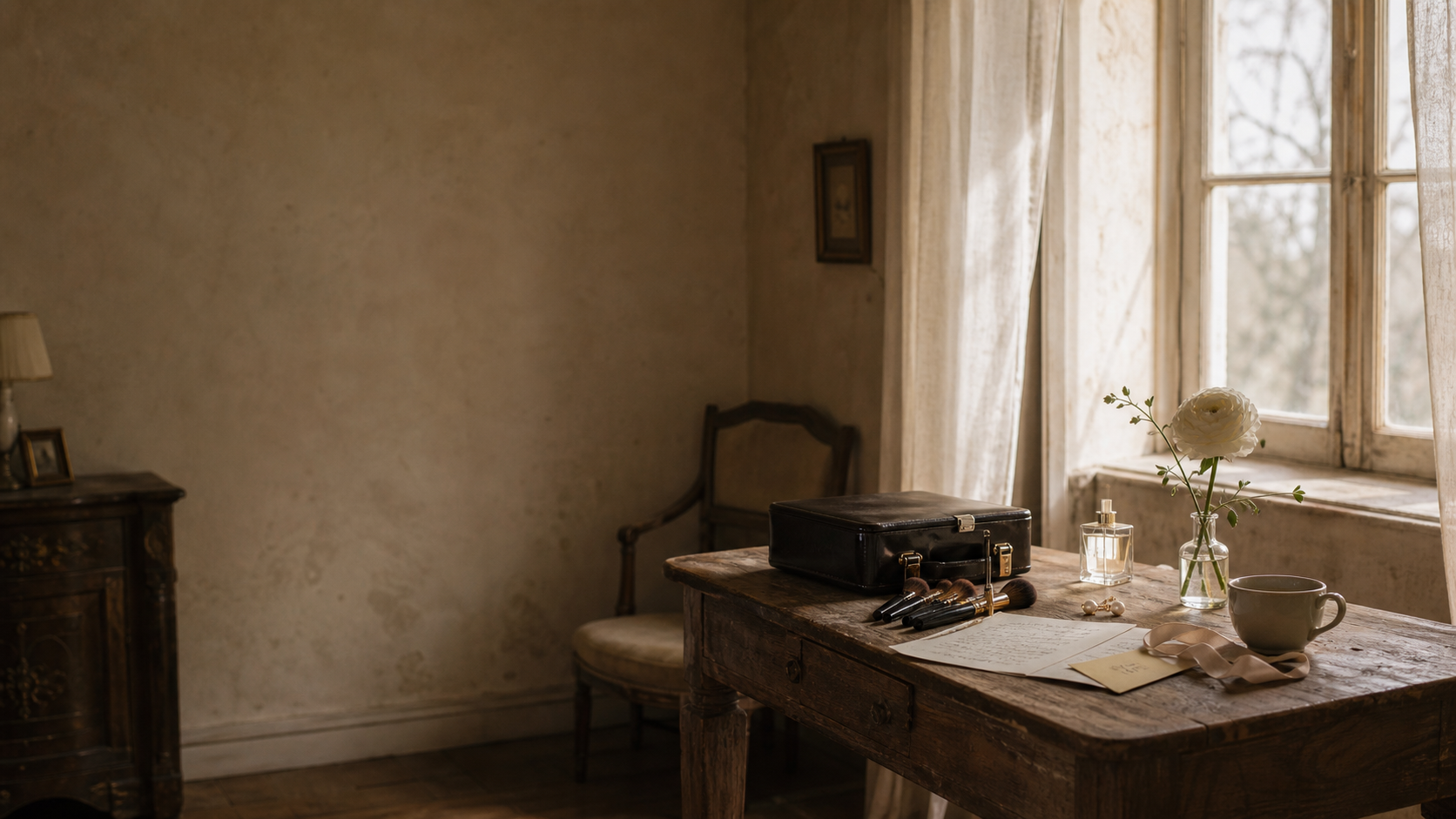
Before the ceremony, the wedding exists inside one room.
Clothing hangs from a cupboard. Jewellery is opened and closed. Someone searches for pins. A parent checks the time without wanting to appear worried. The photographer arrives while breakfast is still on the table.
A good timeline does not remove this life from the morning. It gives it enough room to happen without every small moment becoming a delay.
The calmest wedding mornings are rarely the emptiest. They are the ones in which preparation, conversation, photographs and the unexpected have all been given honest time.
Begin With the Ceremony and Work Backwards
Start with the moment you must be ready to leave, not the printed ceremony time. These are rarely the same. Consider travel through the venue, a lift that may be busy, a procession, a private ritual, or the simple time required to gather clothing without rushing.
Ask the planner or family for the true arrival requirement. Then add the photography window you want before leaving. Some brides prefer only a few quiet portraits. Others want time with parents, siblings and the wedding party. Both choices are valid, but they require different mornings.
Next allow for dressing. Draping, fastening jewellery, securing flowers and making final adjustments often take longer than expected because several people become involved. Only after these blocks are clear should you place the end of makeup and hair.
Working backwards makes the first call time feel less arbitrary. It also reveals where the schedule has become hopeful rather than possible.
The First Call Time
The first call time is when professional preparation begins. It is not necessarily when the bride should wake, and it is not the time everyone else needs to enter the room.
Before the artist arrives, eat something, shower if needed and complete only the skincare already agreed. Keep the room reasonably clear, with access to natural light, a table, a chair and dependable power. This need not feel like staging. A workable corner is enough.
For a very early ceremony, the call may fall in the night. Prepare the room, clothing and essentials before sleeping. Decide who genuinely needs to be awake. A room full of tired people can become busier than a room with two calm ones.
Share access instructions with the team. Hotel reception, locked gates and distant parking can quietly consume a carefully planned buffer before the work begins.
The Hair and Makeup Window
Your artist should tell you how much time the complete preparation requires. Protect that window. It includes more than visible application: skin assessment, preparation, setting, adjustments and the pauses required when the bride needs to answer a question or greet someone.
Hair and makeup may happen sequentially or overlap. The order depends on the hairstyle, tools, team and final look. Avoid creating your own compressed estimate from the time you have seen a simple makeup application take elsewhere. Bridal preparation supports a much longer day.
Keep the number of people receiving services in the room realistic. When several family members are also preparing, assign schedules and separate work areas if possible. The bride’s timeline should not depend on every other person being punctual.
Build time for one short pause. A bathroom break, a few bites of breakfast or five minutes of quiet can restore the morning. If the schedule has no room for a human need, it is already too tight.
Try not to introduce new visual decisions during the application. Save final references and clothing details in one place. Too many voices offering preferences can turn a considered plan into negotiation.
Dressing, Jewellery and the Final Details
Makeup being complete does not mean the bride is ready to be photographed. Draping and jewellery deserve their own time, especially with detailed blouses, layered necklaces, waist belts, veils or flowers.
Lay everything out in sequence. Check clasps and earrings before the morning. Remove tags. Keep spare fasteners, tissues and drinking straws nearby. These ordinary preparations protect far more time than an elaborate emergency kit.
Decide who will help the bride dress. One experienced draper and one trusted family member are often more useful than a circle of advice. Everyone else can enter once the private, practical work is complete.
The final minutes may include lip colour, a bindi, jewellery alignment and checking the transition between face, neck and clothing. These details are small but visible, and they are best handled without someone announcing that the car has arrived.
Photographs, Family and the Room
Preparation photographs can happen throughout the morning, but planned portraits need a clear window. Speak with the photographer about what matters: details, a reveal, images with parents, or a few quiet frames alone.
A reveal is emotional precisely because it cannot be completely scheduled. Allow enough time for the reaction to unfold. A mother may want to adjust a necklace. A father may become quiet. A sibling may make everyone laugh just as the photographer asks for stillness.
If family portraits are important, tell the people involved when to be dressed and where to meet. The bride should not spend her portrait window finding relatives across a hotel.
Keep bags, packaging and half-finished meals away from the chosen portrait corner before the photographer needs it. This is not about making the room perfect. It is about reducing last-minute movement around a bride who has finally become still.
The Buffer Is Part of the Plan
A buffer is not spare time waiting to be filled. It is the part of the schedule that absorbs reality.
A blouse hook may need repair. Flowers may arrive late. The photographer may ask for five more minutes in good light. The bride may simply need to sit before walking into a room full of people.
Twenty to thirty minutes can change the emotional quality of the morning. Where travel or complex dressing is involved, more may be sensible. Do not place optional tasks inside this time because the empty space makes someone uncomfortable.
If everything runs perfectly, the buffer becomes a quiet cup of tea, a conversation with a parent or a moment to look at yourself without anyone asking what comes next.
Very Early Ceremonies
An early ceremony requires decisions the previous evening. Steam clothing, organise jewellery, confirm transport, prepare breakfast and reduce the morning guest list to those with a purpose.
Sleep may be limited, but rest can still be protected. Avoid moving every ritual into the preparation room. Keep lighting gentle until professional work begins, and ask family members to use another room for phone calls and unrelated preparation.
If multiple looks are planned across the day, establish where the first ends and the next begins. The team may need to pack, travel or remain nearby. A timeline that acknowledges these transitions will feel kinder than one built only around ceremony start times.
Most importantly, accept that an early morning may feel unusual. Calm does not require everyone to be fully awake and cheerful. It can be quiet, practical and tender.
Final Thoughts
A wedding morning timeline is not successful because every minute happens exactly as written. It is successful because the important moments remain protected when something changes.
Work backwards from when you truly need to leave. Give beauty, dressing and photographs honest space. Limit the number of people who must be present. Preserve a buffer and resist the temptation to fill it.
The goal is not to make the morning efficient at the expense of feeling. It is to let time move slowly enough that you remember who was in the room, what they said, and how it felt just before the day opened beyond the door.
Frequently Asked Questions
What time should bridal makeup start?
Work backwards from the time you must leave, then include dressing, photographs and a buffer. Your artist should provide the actual preparation duration based on the complete look, hairstyle and ceremony requirements.
How long should I allow for bridal hair and makeup?
The required time varies by look and team. Follow the professional estimate rather than a general online figure, and protect it from overlapping family services, dressing tasks or repeated interruptions.
How much buffer time should a wedding morning include?
Twenty to thirty minutes is useful for many mornings, while travel, complex draping or several portraits may need more. Treat the buffer as part of the schedule, not free time for extra tasks.
Should the photographer arrive before makeup is finished?
Often, yes. Preparation and detail photographs can happen near the end of hair and makeup. Agree on the arrival time with both professionals so photography does not interrupt precise work or reduce the portrait window.
How can I keep my wedding morning calm?
Limit the room to people with a purpose, prepare clothing and jewellery beforehand, eat early, centralise decisions and protect a realistic schedule. Calm usually comes from clear boundaries rather than an empty room.