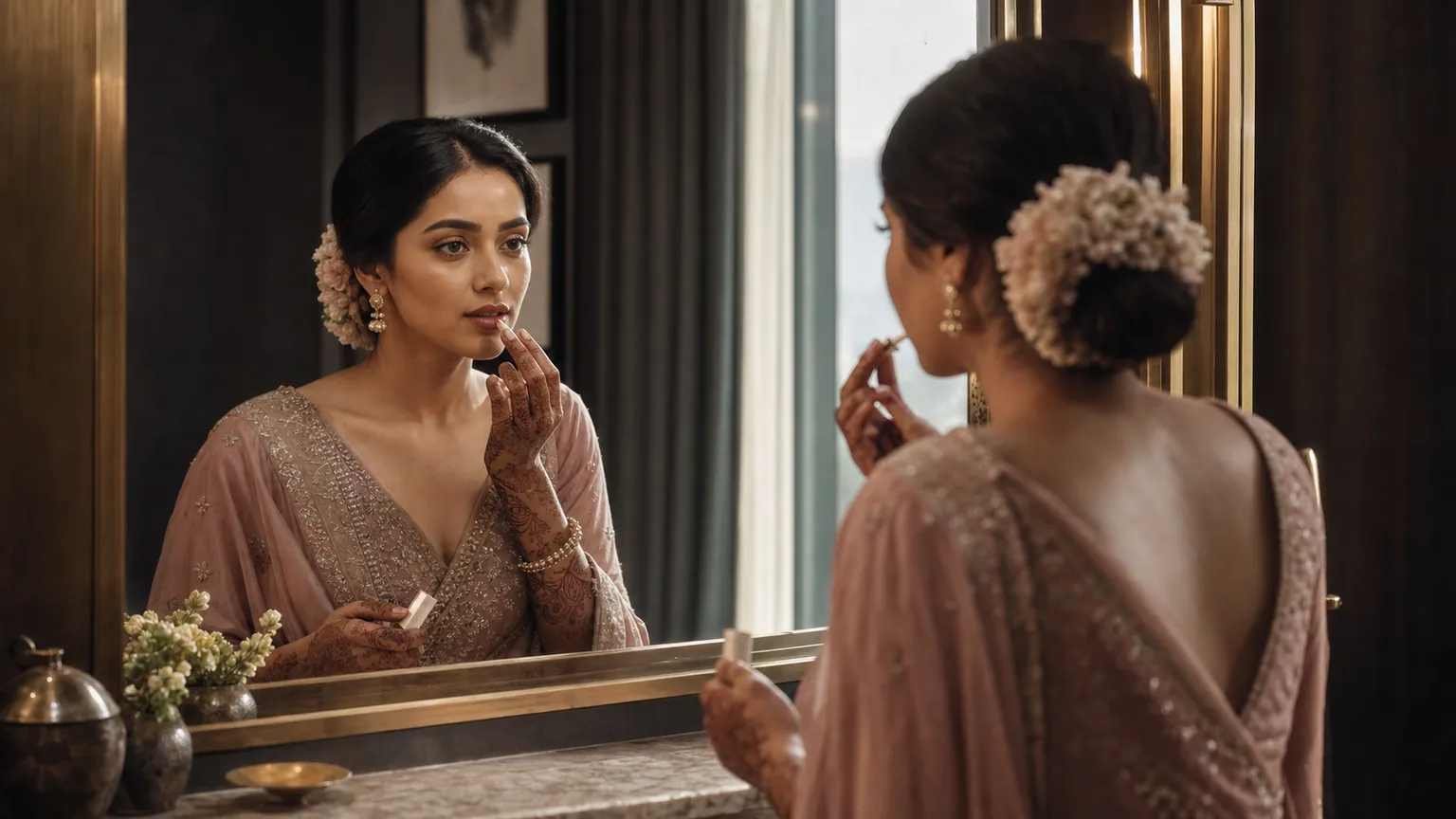
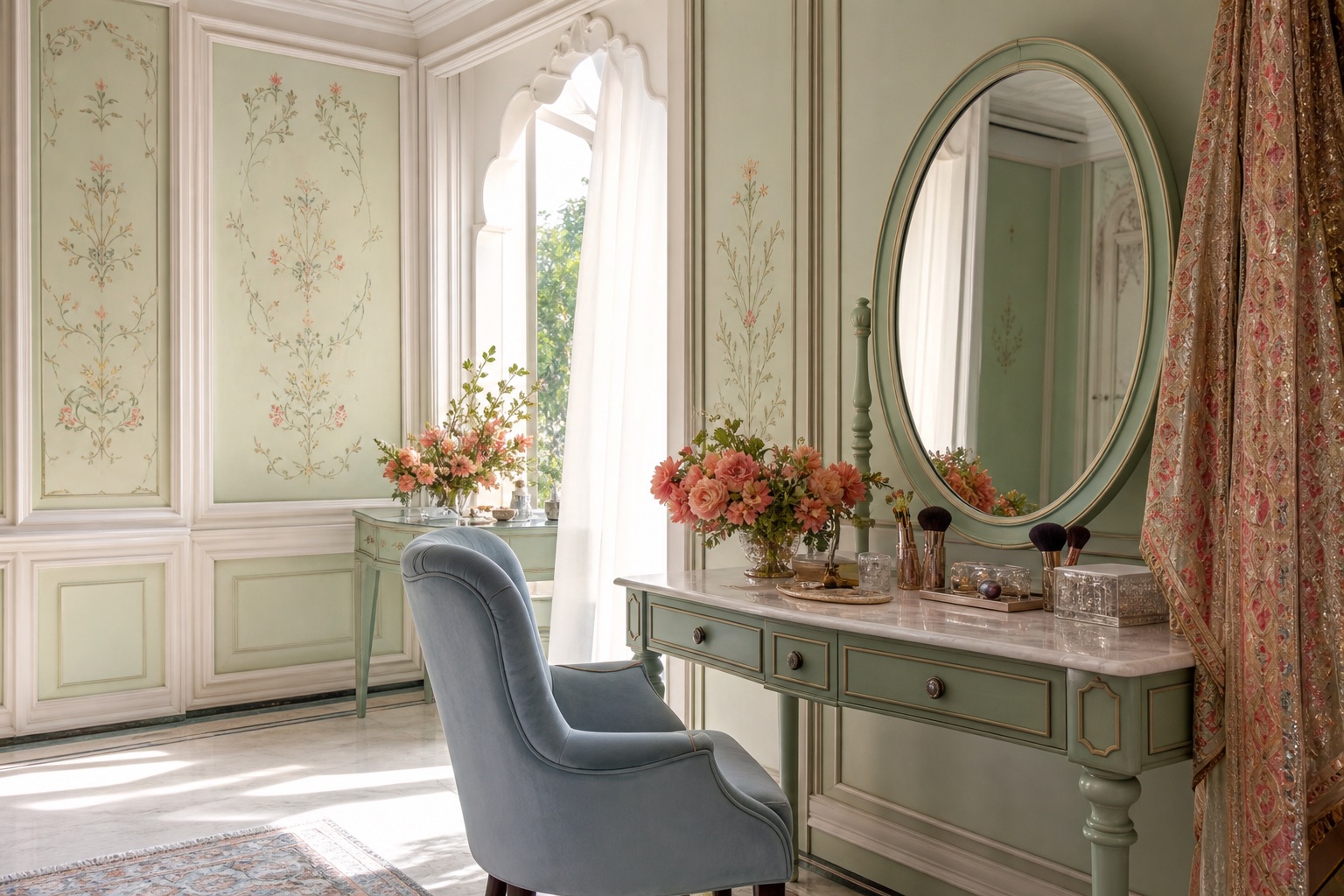
There is a particular moment in a wedding-preparation room when the day becomes real. The bride may still be in a robe or half-draped saree. Someone is looking for an earring back. A sister is checking the flowers. A mother is trying to remember whether she has packed the safety pins. The room is full of small tasks, but it is also full of people trying to take in something important.
Family makeup belongs to that moment. It is sometimes treated as a practical add-on to the bride’s booking: a face to be fitted into the schedule, a chair to be found, a quick request for “something natural.” But mothers, sisters, aunts and close friends appear in the photographs that will hold the day long after the flowers have dried. More importantly, they are part of the bride’s experience of the morning. They deserve a plan that feels calm and respectful of who they are.
The right family makeup does not make everyone look alike. It does not turn a mother into a younger version of the bride or ask a sister to wear a face she would never choose for herself. It gives each person enough polish to feel present in the room, photographed in the light and comfortable through the length of the celebration.
That is a more generous kind of luxury: not uniformity, but attention.
The Preparation Room Belongs to Everyone in It
A bride’s makeup begins before the first brush. So does everyone else’s. The atmosphere of the room—who is rushing, who is waiting, who has a place to sit, who knows what time she needs to be dressed—shapes how the face is held. A perfectly chosen lip colour will not compensate for a mother who has been asked to get ready in ten minutes while answering calls from every part of the venue.
Begin by naming the people who matter to the bride’s morning. There may be a mother, mother-in-law, sister, cousin, best friend, aunt or a small bridal party. Some may want a full makeup and hair service; some may want only makeup; some may be happiest with a polished version of their own routine. Do not assume. A five-minute conversation in advance is much kinder than deciding in the room.
Ask three questions: what time do they need to be dressed, what level of makeup feels like them, and whether there is anything about their skin or comfort that should be known in advance. A family member who rarely wears makeup may prefer a lighter base, a familiar lip and time to look at herself in daylight. Someone who enjoys a more defined eye may simply need a plan that works with her saree, glasses or contact lenses.
The answers create a useful map. They also protect the bride’s final hour. When family preparation has been treated as an afterthought, it tends to spill into the moment the bride needs for jewellery, draping, portraits and a breath before leaving. When it has a thoughtful place in the schedule, the room feels less like a queue and more like a gathering.
This is one reason a realistic wedding-morning timeline matters. It is not only about getting the bride to the ceremony on time. It is about allowing the people around her to be ready enough that they can actually be with her.
Family Makeup Is Not a Softer Copy of Bridal Makeup
Bridal makeup has a particular job. It must respond to the bride’s clothing, ceremony, photographs, individual preferences and the visual focus that naturally falls on her. Family makeup has a different job. It should be beautiful in the same environment, but it should not ask every face to carry the same weight.
That distinction is helpful. A mother in a deep silk saree may look wonderful with a satin base, softly lifted eyes, an assured brow and a rose, berry or warm neutral lip that gives her face clarity. Her look can be elegant and fully finished without competing with the bride’s jewellery or colour story. A sister in a lighter lehenga may want more movement at the eye and a fresher cheek. A close friend may feel most herself with a clean liner and a sheer but visible lip.
There is no hierarchy of beauty in the room. There is only the question of what lets each person look like herself in a more ceremonial version of her usual life. Makeup becomes most flattering when it begins there.
Be wary of vague instructions such as “make everyone glowy” or “do the same look for all.” Glow depends on skin, light, texture and comfort. A strong dewy finish might be beautiful on one person and difficult for another through a warm afternoon. A shared visual tone can come from the palette, the softness of the eye or the restraint of the base without placing the same products on every face.
The bride’s own makeup provides context, not a template. If her look is warm and softly defined, the family’s makeup can carry a related warmth. If her silk is cool and jewel-toned, a family lip or cheek can move in that direction. The link should feel familial, not uniform.
“The most beautiful family photographs are not the ones where everyone matches. They are the ones where everyone looks at ease beside one another.”
Comfort Is the Brief
Comfort is not the opposite of polish. For mothers and family members, it is often the condition that allows polish to last. A beautiful base that feels too heavy, a lash that irritates an eye, a lip shade that needs constant checking, or a hairstyle that cannot survive a greeting can make someone feel more self-conscious rather than more celebratory.
Ask how each person normally wears makeup. Someone who wears glasses may need a little care around the bridge of the nose and a level of eye definition that remains visible behind frames. Someone with dry skin may prefer a complexion that is prepared and lightly set rather than continuously powdered. Someone who has very mature skin does not need a different kind of beauty; she needs products and placement that respect texture instead of trying to erase it.
Thin, flexible layers are often the most comfortable choice. They let skin move, allow expression to remain visible and make any small touch-up less complicated. The same principle applies to colour. A lip with enough depth to read in a photograph is useful, but it should still feel like a colour the wearer can inhabit. If a mother has worn a particular rose, brick, berry or red for years, that familiarity can be a strength rather than something to replace.
Trials can be valuable here, especially for someone who has sensitive skin, rarely wears makeup, is uncertain about a new silhouette or will be photographed throughout several functions. A trial need not become an elaborate event. It can be a calm hour to test the base in daylight, establish comfort and decide whether the person wants more or less definition than she first imagined.
It is also appropriate to keep health questions within their proper boundaries. If someone has a known skin condition, eye irritation, active sensitivity or a medical concern, familiar products and advice from their own clinician should take priority over a wedding-day experiment. An artist can work thoughtfully around comfort; she should not be asked to diagnose it.
Create a Shared Palette Without Making Everyone Match
Family photographs become visually coherent when there is a little conversation between the looks. This can happen through fabric, metal, flowers, the warmth of the room and the bride’s own styling. It does not require identical lip colours or repeated eyeshadow.
Start with the clothing. If the family is wearing a mixture of wine, rust, ivory, sage and gold, the makeup can live in a related warm-neutral range: rose-brown, terracotta, soft berry, bronze, taupe and warm pink. If the saris and lehengas are cooler—amethyst, blue, silver, mauve—the face may benefit from a cooler rose, plum-brown or gentle mauve without abandoning skin warmth altogether.
Jewellery is a useful secondary guide. Antique gold tends to be beautiful beside cheek and lip colours with warmth. White metal and diamond-heavy pieces can make a cleaner neutral or rosy direction feel especially polished. But the same rule that applies to the bride applies to family: do not match a stone colour literally unless the person genuinely loves the result. A hint is usually enough.
Consider the group at portrait distance. If every person has an equally deep mouth, very dark eye and strong contour, the image can feel dense. If every person has been made pale and glossy, it can lose shape. Variation gives the photograph life. One person may carry a warm lip, another a clearer eye, another beautifully dimensional skin. The shared element is not sameness; it is care.
For a mother of the bride or groom, the saree often does more of the expressive work. A rich charcoal, emerald, maroon, rust, indigo or gold silk has enough character that the face does not need every possible trend. A refined eye, believable skin and a lip with intention will often look more powerful than adding more detail simply because the occasion is important.
The bride’s jewellery and fabric can offer a gentle anchor too. Our guide to planning bridal makeup around heirloom jewellery and silk is useful when the family is trying to understand the wider visual language of the day. The aim is to place each person in that language without making the room feel staged.
Build the Schedule Backwards From the Photograph
Family makeup is a timing question as much as a beauty question. The right schedule starts with the first moment the people involved must be fully dressed: a house ceremony, a first-look photograph, a departure to the venue, an immediate family portrait or the arrival of guests. Work backwards from there, adding time for hair, draping, jewellery, clothing, breaks and the ordinary unpredictability of a wedding morning.
Whenever possible, mothers and close family should be completed before the bride. Not because they are less important, but because the bride’s final stage has the most dependencies. Her hair, drape, jewellery, flowers, portraits and makeup all converge near the end. If family services are still underway at that point, the bride will be asked to wait or the room will become unnecessarily frantic.
Think through who needs to help the bride dress. A mother or sister may want time after her own makeup to put on jewellery, take calls from vendors, meet relatives or simply sit with the bride. Schedule her accordingly. There is little sense in finishing her makeup precisely when she needs to begin another role.
The size of the team should follow the reality of the group, not a hopeful calculation. Four family members, separate hair and draping, a short call time and a bride with a detailed look may require more than one artist. A studio should be able to explain what the timing allows and what it does not. Compressing too many faces into the bride’s final hour is not efficient; it is usually the beginning of the rush everyone hoped to avoid.
Make the family’s touch-up plan equally simple. Each person may need a lip colour, a few tissues, perhaps blotting papers and a place to check herself before portraits. There is no need to multiply full kits. The same principles in our bridal touch-up kit guide apply: keep what has a clear job and leave out the rest.
Use the Family-Portrait Test
Before the day, imagine one simple photograph: the bride standing with the women who raised her, supported her or know her best. The picture may be formal, but the feeling rarely is. It will hold a hand on a shoulder, a glance between sisters, a mother who is trying not to cry, the texture of silks and the small evidence of a morning spent together.
The makeup should serve that photograph. Not by being invisible, but by allowing expression to remain the first thing one sees. Is the base still recognisable as their skin? Are the eyes clear enough to hold emotion? Does the lip give the face structure without demanding attention? Is everyone comfortable enough to forget the camera after the first few frames?
This test is particularly useful when deciding whether to add more. More contour, more highlight, darker liner, heavier lashes, another shade. Sometimes the answer is yes. Often, when the face is viewed beside the saree, jewellery and people who matter, the look already has all the presence it needs.
There is a quieter benefit too. When family members feel looked after, they become part of the calm around the bride. They are not waiting to be called, worrying that they look unfinished or trying to solve their own makeup in a corner of the room. They are there to enjoy her.
That may be the most elegant outcome of family beauty planning: it returns everyone to the reason they gathered in the first place.
Frequently Asked Questions
How should mother-of-the-bride makeup differ from bridal makeup?
It should not be a lesser copy of the bridal look. The aim is polished, comfortable makeup that suits her own face, clothing, skin and role in the day. It should feel composed in photographs without making her look unlike herself.
When should mothers and close family have their makeup done?
Schedule them before the bride whenever possible, with a buffer for dressing, jewellery and the practical things they may need to handle. Work backwards from the first photograph or ceremony they need to attend.
Do mothers need a trial for an Indian wedding?
A trial can be especially useful for sensitive skin, someone who rarely wears makeup, several functions or a meaningful change from a usual routine. At minimum, discuss comfort, product preferences and the intended finish before the day.
How can family makeup look good in wedding photographs?
Well-matched skin, softly defined features, enough cheek and lip colour for the room and a schedule that allows everyone to be dressed without rushing make the greatest difference. Uniform makeup is not required.
How many makeup artists are needed for the family?
That depends on how many people need services, their call times, hair and draping needs, venue logistics and the start of photography. A practical schedule is more valuable than asking one artist to fit too many faces into a short window.